
Review · spring · summer · fall
Merrell Women's Moab 3 Mid Waterproof Hiking Boots Review
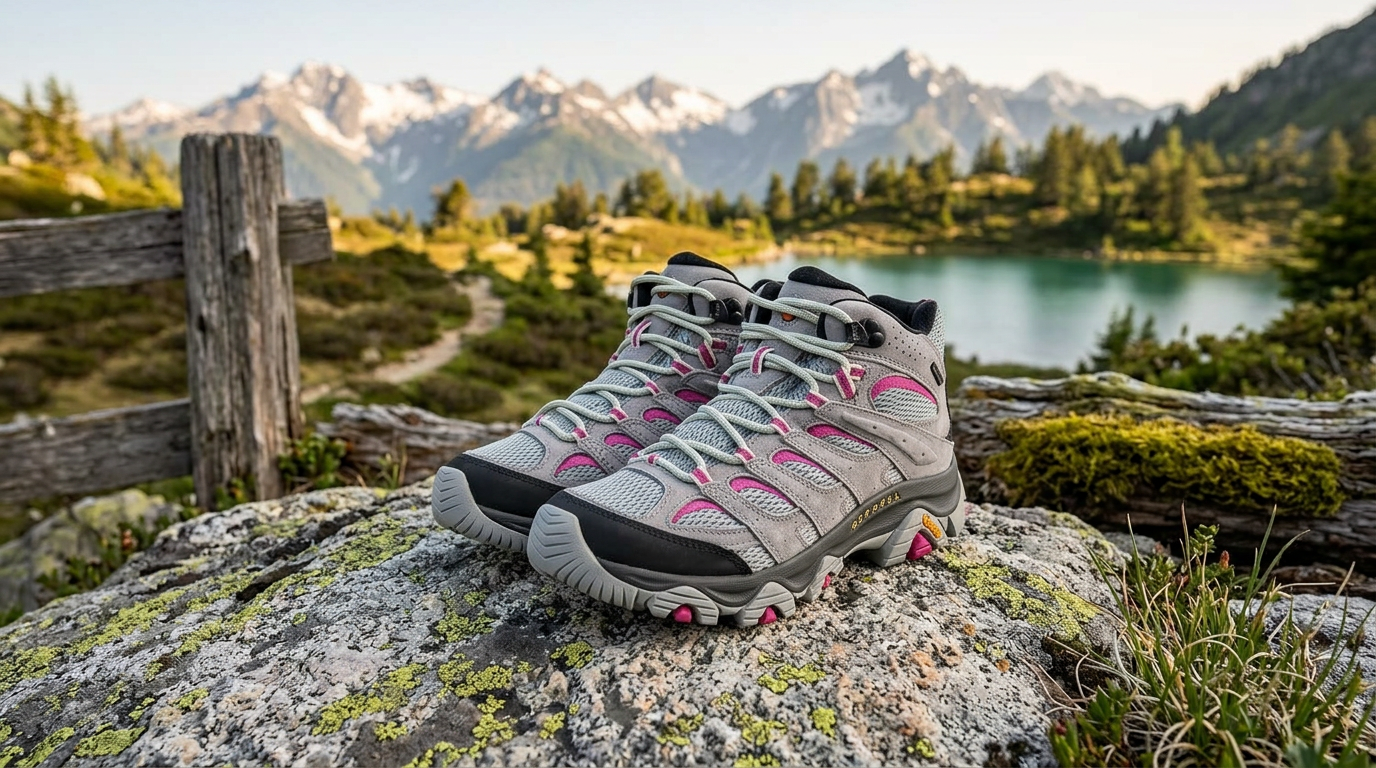
The Merrell Women's Moab 3 Mid Waterproof Hiking Boots are built for day hikers and casual backpackers who prioritize comfort and waterproof protection over aggressive tread or ultralight weight. This third-generation update to Merrell's best-selling hiking boot brings recycled materials, a proven Vibram TC5+ outsole, and the brand's signature Air Cushion heel system into a mid-height package that trades technical precision for all-day wearability on moderate terrain.
Disclosure: Four Seasons Gear is reader-supported. When you buy through links on our site, we may earn an affiliate commission at no extra cost to you. Prices and availability are accurate as of the time we last checked.
Construction and Materials
The Moab 3 Mid combines a pigskin leather and mesh upper with an integrated waterproof membrane (Merrell doesn't specify which membrane technology, but it's likely a proprietary treatment rather than Gore-Tex). The upper uses 100% recycled laces and webbing, a sustainability upgrade from the Moab 2. A bellows tongue design seals the gusset to keep trail debris from migrating into the boot, while a protective rubber toe cap shields against rock strikes and root kicks.
Inside, a 100% recycled mesh lining wicks moisture, paired with Merrell's Kinetic Fit ADVANCED removable insole. This contoured footbed features reinforced heel cushioning rated for "medium support" — a designation that places it between casual sneakers and stiff backpacking boots. The molded nylon arch shank provides torsional rigidity without the weight penalty of a full-length steel shank.
Specs
Intended Use and Performance Context
OutdoorGearLab and Switchback Travel position the Moab 3 Mid as a volume leader in the "comfort-first day hiker" category — boots designed for maintained trails, moderate elevation gain, and loads under 20 pounds. The EVA midsole and Air Cushion heel absorb shock effectively on gravel paths and packed dirt, but the relatively soft platform lacks the underfoot protection needed for sustained talus fields or off-trail scrambling.
The Vibram TC5+ outsole uses a 5 mm lug depth, which CleverHiker notes provides adequate grip on dry to damp trails but can struggle in wet mud or loose scree compared to deeper, more aggressive tread patterns. For context, technical approach boots often feature 6–7 mm lugs with climbing zones at the toe. The Moab 3's tread is optimized for versatility rather than specialized terrain.
Durability Considerations
Pigskin leather offers a favorable durability-to-weight ratio compared to full-grain cowhide, though it's slightly less abrasion-resistant over multi-year use. The mesh panels enhance breathability but represent potential wear points if the boot is dragged through dense brush or sharp granite. The Vibram TC5+ compound is a proven formulation with good longevity — expect 500–800 miles before significant tread wear, depending on surface type and gait.
The EVA midsole will compress over time, typically losing 15–25% of its cushioning after 300–400 miles of use. This is standard for foam midsoles and represents the tradeoff for lightweight comfort. The nylon shank is less prone to fatigue than plastic alternatives and should outlast the midsole's effective lifespan. The waterproof membrane's longevity depends on care — avoid prolonged storage in damp conditions, which can degrade adhesives.
Fit and Sizing Notes
Merrell's women's-specific last is known for a generous toe box and medium-volume fit. REI's product page notes that the Moab line typically runs true to size, though hikers with narrow heels may experience slippage even when the midfoot is properly snugged. The 4-inch boot opening accommodates most calf widths without binding, and the lacing system extends low enough to adjust forefoot volume.
The removable Kinetic Fit insole allows customization for hikers who need orthotic support or prefer a different arch profile. The medium-support rating means the insole provides more structure than a flat sneaker insert but less than the rigid footbeds found in mountaineering boots.
Value and Category Position
At $119.95 MSRP, the Moab 3 Mid Waterproof sits in the mid-tier pricing band for women's hiking boots. It undercuts premium models with Gore-Tex membranes and Nubuck leather uppers by $40–80, while offering more underfoot support and waterproofing than budget trail runners. The inclusion of recycled materials adds environmental value without inflating the price.
This boot competes directly with offerings like the Keen Targhee III Mid and Columbia Newton Ridge Plus, all of which prioritize comfort and accessibility over technical performance. Hikers seeking a lighter, more nimble option for dry conditions might consider low-cut trail runners, but those wanting ankle support and waterproofing for spring snowmelt or creek crossings will find the Moab 3's feature set appropriate.
What we like
Trade-offs
Best For
- Day hikers on maintained trails with moderate elevation gain (under 2,000 feet)
- Casual backpackers carrying loads under 20 pounds for 1–2 night trips
- Spring and fall hikers needing waterproof protection for creek crossings and snowmelt
- Hikers with wider feet or high-volume insteps seeking a generous toe box
- Budget-conscious buyers prioritizing comfort over ultralight weight or technical features
- Trail users who value sustainability features like recycled materials
Not For
- Thru-hikers or high-mileage users needing boots that maintain cushioning beyond 400 miles
- Technical scramblers tackling sustained talus, scree, or off-trail routes
- Ultralight backpackers for whom every 100 grams matters
- Hikers with narrow heels who need a precision-fit heel cup
- Winter mountaineers requiring crampon compatibility and insulated uppers
- Trail runners preferring low-cut, nimble footwear for dry, fast-paced hiking
Frequently Asked Questions
+How does the Moab 3 Mid's waterproofing compare to Gore-Tex boots?
Merrell uses a proprietary waterproof membrane rather than Gore-Tex, which typically means slightly lower breathability but comparable water resistance for the price point. Field reports from OutdoorGearLab and REI indicate the membrane keeps feet dry during creek crossings and rain, though it may not vent moisture as efficiently during high-output climbs in warm weather. For most day hikers, the performance difference is negligible; serious backpackers in humid climates might prefer Gore-Tex's proven breathability.
+Can I use these boots for winter hiking or snowshoeing?
The Moab 3 Mid is rated for spring, summer, and fall use. It lacks insulation and the aggressive tread needed for icy trails or deep snow. The waterproof membrane will keep feet dry in slushy conditions, but the EVA midsole stiffens in cold temperatures, reducing shock absorption. For winter hiking, consider an insulated boot with a deeper lug pattern and compatibility with microspikes or light crampons.
+How much break-in time do these boots require?
CleverHiker notes that the Moab 3's soft EVA midsole and flexible upper typically require minimal break-in — most hikers report comfort within 10–20 miles. The pigskin leather softens faster than full-grain cowhide. However, hikers should still test the boots on shorter trails before committing to a full-day hike, particularly to assess heel lockdown and hotspot formation around the ankle collar.
+What's the difference between the Moab 3 Mid and the Moab 3 Mid Waterproof?
The waterproof version adds a sealed membrane and typically weighs 100–150 grams more per pair. The non-waterproof Moab 3 Mid uses the same upper materials but omits the membrane, offering better breathability in dry climates at the cost of wet-weather protection. Choose the waterproof version if you hike in spring runoff, frequent creek crossings, or rainy conditions; opt for the non-waterproof if you prioritize ventilation and lighter weight.
+Can I replace the insole with custom orthotics?
Yes, the Kinetic Fit ADVANCED insole is removable and designed to accommodate custom orthotics. The medium-support footbed provides a baseline arch structure, but hikers with plantar fasciitis, high arches, or other foot conditions can swap in their preferred insoles without compromising the boot's fit. The generous toe box and medium volume accommodate the added thickness of most orthotic inserts.
Final Recommendation
The Merrell Women's Moab 3 Mid Waterproof Hiking Boots deliver reliable comfort and wet-weather protection for day hikers and weekend backpackers on moderate terrain. The Vibram TC5+ outsole, Air Cushion heel, and waterproof membrane form a capable package at a mid-tier price, while recycled materials add environmental value. Switchback Travel and OutdoorGearLab consistently rank the Moab 3 as a volume leader in the comfort-first category, noting its generous fit and shock-absorbing platform.
The tradeoffs are clear: EVA midsole compression limits longevity to 300–400 miles of prime cushioning, the tread pattern lacks the aggression for technical scrambling, and the pigskin/mesh upper won't outlast full-grain leather over years of heavy use. But for hikers prioritizing all-day comfort over ultralight weight or specialized performance, the Moab 3 Mid Waterproof remains a proven choice. It's the boot equivalent of a reliable trail companion — not flashy, not cutting-edge, but dependable where it counts.

Read next
More from this category
REVIEW
Lowa Women's Renegade GTX Mid Hiking Boot Review
REVIEW
Salomon X Ultra 4 Mid GTX Review: Fast-Light Mid-Cut for Day Hikers
REVIEW
KEEN Men's Targhee III Waterproof Mid Hiking Boots Review
BEST OF
Best Rechargeable Headlamps for Backpacking
BEST OF
Best Beginner Binoculars for Hiking and Bird Watching
GUIDE