Buying guide
How to Pick a Cooler That Actually Keeps Ice for 5 Days
Disclosure: Four Seasons Gear is reader-supported. When you buy through links on our site, we may earn an affiliate commission at no extra cost to you. Prices and availability are accurate as of the time we last checked.
What You're Really Deciding
The core trade-offs in cooler selection boil down to three axes: insulation thickness (which drives ice retention but adds weight and bulk), capacity versus portability (a 70-quart cooler holds more but weighs 30+ pounds empty), and construction quality (rotomolded walls versus injection-molded, gasket design, latch robustness). A true 5-day cooler requires at least 2 inches of polyurethane foam insulation, a continuous gasket seal, and disciplined packing—but that means you're carrying significantly more weight than a basic cooler. If you're driving to a campsite and leaving the cooler stationary, maximize insulation. If you're portaging or hiking in, you'll compromise on ice retention to save pounds.
Insulation Thickness and Material
Insulation thickness is the single biggest determinant of ice retention. Budget coolers use 1 to 1.5 inches of foam; premium models use 2 to 3 inches. The material matters too: closed-cell polyurethane foam outperforms polystyrene (the white bead foam in cheap coolers) by a significant margin. Polyurethane has an R-value around 6 per inch; polystyrene sits closer to 4. That difference compounds over days.
Specs
More insulation is worth paying for if your trips exceed three days, if you're in hot climates (above 85°F), or if you can't restock ice. For weekend trips in moderate weather, 1.5 inches suffices. The Coleman Xtreme 5-Day Cooler 70 Quart uses thicker-than-average insulation for its price bracket and demonstrates that you don't need rotomolded construction to hit multi-day performance if the foam and seals are engineered correctly.
Seal and Gasket Design
A continuous rubber gasket around the lid perimeter is non-negotiable for 5-day retention. Cheaper coolers use a channel gasket or no gasket at all, allowing warm air infiltration at every seam. Premium coolers employ a freezer-style gasket—think of your refrigerator door seal—that compresses fully when latched. The latch mechanism matters as much as the gasket: robust T-latches or cam-action latches pull the lid tight; friction hinges and simple clasps don't generate enough clamping force.
Drain plugs are another weak point. A threaded plug with an O-ring seal prevents air exchange; a simple snap-in plug leaks cold and admits heat. The Igloo BMX 52 Quart Cooler uses a screw-drain with a tethered cap and gasket, a detail that separates it from budget siblings in the same brand family.
Capacity and Internal Volume
Cooler capacity is rated in quarts, but usable volume depends on ice-to-content ratio. For 5-day retention, you need a 2:1 ice-to-food ratio by volume—meaning a 60-quart cooler holds roughly 20 quarts of food and 40 quarts of ice. Manufacturers measure total internal volume, not usable space after accounting for necessary ice mass.
Specs
Bigger isn't always better. An oversized cooler half-filled with ice and food performs worse than a right-sized cooler packed full, because air gaps inside accelerate heat transfer. Match capacity to your actual trip: 50–60 quarts for a 4-day trip with two people, 70–90 quarts for a family of four going a week.
Construction: Rotomolded vs. Injection-Molded
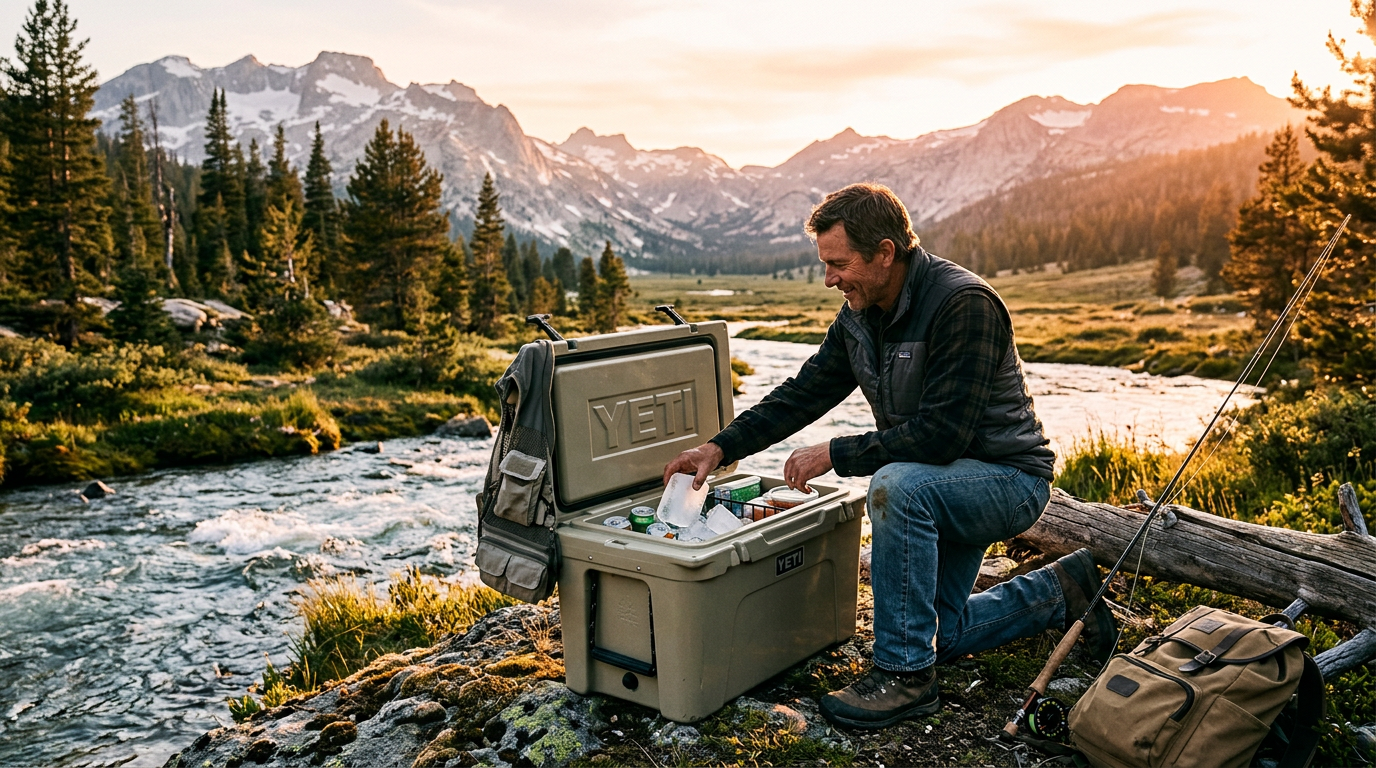
Rotomolded coolers (Yeti, RTIC, Orca) are formed from a single piece of plastic rotated in a mold while polyurethane foam is injected under pressure. This creates seamless walls with uniform insulation density and no weak points. Injection-molded coolers use two plastic shells bonded together with foam between them. The seam is a thermal bridge, and foam density varies.
Rotomolded coolers are 20–40% heavier and cost 2–4× more than injection-molded equivalents. The performance gap has narrowed: a well-executed injection-molded cooler with 2-inch walls and a good gasket can match a rotomolded cooler's ice retention within 12–24 hours. Rotomolded construction excels in durability—bear-resistance, UV stability, and impact tolerance—not purely in thermal performance.
Weight and Portability
Empty weight scales with insulation thickness and wall material. A 50-quart budget cooler weighs 12–15 pounds empty; a 50-quart rotomolded cooler weighs 25–30 pounds. Add 40 pounds of ice and 20 pounds of food, and you're moving 75–90 pounds total. If you're loading into a truck bed, weight is irrelevant. If you're carrying the cooler 200 yards to a beach or campsite, every pound counts.
- Coolers under 20 pounds empty: suitable for solo carry over short distances, typically sacrifice insulation thickness
- Coolers 20–30 pounds empty: require two-person carry when loaded, offer premium insulation
- Coolers over 30 pounds empty: effectively stationary once loaded, maximize thermal performance
- Wheels and tow handles: add 3–5 pounds but enable solo transport on flat ground
For mobile use—kayaking, canoeing, off-road trails—prioritize a cooler under 20 pounds empty with molded-in handles and tie-down points. For base-camp use, accept the weight penalty of thick insulation.
Ice Retention Testing Standards
Manufacturers test ice retention under controlled conditions: ambient temperature (usually 90°F), ice type (block or cubed), ice-to-air ratio, and lid-opening frequency. There's no industry standard equivalent to EN 13537 for sleeping bags, so claimed retention times vary wildly in methodology. A "5-day cooler" tested with block ice, no openings, and 80% ice fill will fail to hit 5 days with cubed ice, twice-daily openings, and 50% ice fill.
Real-world variables that shorten retention: opening the lid (costs 2–4 hours per opening), cubed ice versus block ice (block lasts 30–50% longer), pre-chilling the cooler (adds 24–36 hours), ambient temperature above 90°F (every 10°F costs roughly one day), and direct sunlight exposure (adds 20–30°F effective ambient temperature).
Additional Features Worth Considering
Integrated features add cost but can improve usability. Molded-in cup holders, rulers, and tie-down slots are conveniences. A divided interior or removable basket keeps dry goods separate from ice melt. Non-slip feet prevent sliding in truck beds. Stainless steel hardware resists corrosion in saltwater environments. Bear-resistance certification (IGBC approved) matters in grizzly country and requires specific latch and hinge designs.
Specs
Prioritize features that match your use case. A kayaker needs tie-down slots and a low profile; a car camper benefits from a divided interior and wheels.
Match the Cooler to Your Trip
Use case determines the right balance of insulation, capacity, and portability. Here's how to map your trip profile to cooler specs:
- Day trips and tailgating (1 day, frequent access): 20–35 quarts, 1–1.5 inch insulation, prioritize light weight and easy carry. Ice retention under 24 hours is acceptable.
- Weekend car camping (2–3 days, moderate access): 40–60 quarts, 1.5–2 inch insulation, balance weight and performance. Look for a good gasket and drain plug.
- Extended base camp (5+ days, minimal access): 65–100 quarts, 2+ inch insulation, rotomolded or premium injection-molded. Pre-chill the cooler and use block ice. Weight is secondary.
- Paddle trips and mobile camping (3–5 days, portability critical): 40–50 quarts, 1.5–2 inch insulation, under 20 lbs empty. Sacrifice some retention for weight savings. Use a 2:1 ice ratio and limit openings.
- Hot climate or desert trips (any duration, 95°F+): Add 20% capacity for extra ice, prioritize 2+ inch insulation and reflective exterior colors. Consider a secondary small cooler for frequently accessed items to minimize opening the main cooler.
If you're uncertain between two sizes, round up—it's easier to pack a larger cooler efficiently than to cram an undersized one.
Packing Techniques for Maximum Retention
Even a premium cooler fails without proper packing. Start by pre-chilling the cooler for 12–24 hours: fill it with sacrificial ice or freeze gel packs, then dump and repack with trip ice. Use block ice on the bottom (lasts longer) and cubed ice on top (fills gaps). Layer items with the most-accessed on top to minimize digging. Drain melt water daily—water conducts heat faster than air, counterintuitively.
Minimize lid openings by planning meals in sequence and packing accordingly. Each opening costs 2–4 hours of retention. In hot weather, cover the cooler with a reflective tarp or shade cloth—direct sun can add 20–30°F to the effective ambient temperature. Keep the cooler in the shade and elevate it off hot surfaces like asphalt or truck beds.
Price Ranges and What You Get
Cooler pricing spans $30 to $400+. Budget coolers ($30–80) use thin insulation and basic gaskets; expect 1–2 day retention. Mid-range coolers ($80–180) offer 1.5–2 inch insulation and better seals; these hit 3–5 day retention with proper packing. Premium coolers ($200–400) are rotomolded with 2–3 inch walls and freezer-grade gaskets; they deliver 5–7+ days and superior durability.
Specs
The value inflection point sits around $120–150, where you get 2-inch insulation and quality gaskets without paying for rotomolded construction or brand premium. If you camp more than 10 days per year, the mid-range tier pays for itself in ice savings and food safety.
Maintenance and Longevity
Coolers last 10–20 years with minimal maintenance. After each trip, rinse with dilute bleach solution (1 tablespoon per gallon) to prevent mold and odor. Dry completely before storing with the lid propped open—trapped moisture degrades gaskets and promotes mildew. Inspect the gasket annually for cracks or compression set; replacement gaskets cost $15–30 and restore performance. Lubricate hinges and latches with silicone spray, not petroleum-based lubricants which degrade rubber.
UV exposure is the primary killer of plastic coolers. Store indoors or under cover when not in use. Rotomolded coolers tolerate UV better than injection-molded, but both will fade and embrittle after years of direct sun. Avoid dragging coolers across rough surfaces—abrasion wears through the outer shell and compromises insulation.
+Is block ice really better than cubed ice for multi-day trips?
Yes, by a significant margin. Block ice has a lower surface-area-to-volume ratio, so it melts 30–50% slower than an equivalent weight of cubed ice. A 10-pound block will outlast 10 pounds of cubes by 1–2 days. The downside is that blocks don't conform to irregular spaces, leaving air gaps. The optimal approach is a layer of block ice on the bottom for thermal mass, with cubed ice on top to fill voids around food items.
+Should I drain melt water or leave it in the cooler?
Drain it daily. Water conducts heat roughly 25 times faster than air, so a cooler half-filled with melt water loses ice faster than one with air gaps. The ice-water slurry does keep items colder while it lasts, but it accelerates the overall melt rate. Drain through the plug (not by opening the lid) once per day, ideally in the morning when ambient temperature is lowest.
+How much does pre-chilling the cooler actually help?
Pre-chilling adds 24–36 hours of retention by eliminating the thermal load of cooling the cooler's mass from ambient to freezing. A 50-quart cooler with 2-inch polyurethane walls contains roughly 8–10 pounds of plastic and foam that must be chilled. That's equivalent to melting 2–3 pounds of ice. Pre-chill by filling the cooler with sacrificial ice or frozen gel packs 12–24 hours before your trip, then dump and reload with fresh ice. This is the single highest-ROI packing technique.
+Do I need a separate cooler for drinks to preserve ice in my main cooler?
For trips longer than 3 days, yes—it's worth the hassle. A drinks cooler gets opened 10–20 times per day; a food cooler should be opened 2–3 times per day. Each opening costs 2–4 hours of retention. By segregating frequently accessed items, you protect the main cooler's thermal envelope. Use a smaller, lighter cooler for drinks (20–35 quarts) and accept that it will need ice replenishment. This strategy can extend your main cooler's retention from 5 days to 7+ days.
+Are bear-resistant coolers worth the extra weight and cost?
In grizzly country or areas with habituated black bears, IGBC-certified coolers are non-negotiable—many parks require them by regulation. Bear-resistant coolers add 5–10 pounds and $50–150 due to reinforced latches, hinges, and locking mechanisms. Outside of bear territory, the extra weight and cost buy you nothing. If you camp in bear country more than a few times per year, invest in a certified cooler. Otherwise, use a standard cooler and proper food storage techniques (bear canisters, bear bags, or provided lockers).
+Can I use dry ice to extend retention beyond 5 days?
Yes, but with caveats. Dry ice (solid CO₂) sublimates at -109°F and will keep a cooler frozen for 7–10+ days. Use 10–15 pounds of dry ice per 50 quarts of cooler volume. Wrap dry ice in newspaper to slow sublimation and prevent direct contact with food (causes freezer burn). Ensure the cooler has a pressure-release valve—sublimating CO₂ generates gas pressure that can warp or crack a sealed cooler. Dry ice costs $2–4 per pound and isn't available everywhere, but it's the only practical way to extend retention beyond a week without refrigeration.
+Does cooler color affect ice retention?
Yes, but the effect is smaller than most people assume. White or light-colored coolers reflect more solar radiation than dark colors, reducing heat gain by 5–10°F in direct sun. That translates to roughly 6–12 hours of additional retention over a 5-day trip. It's a meaningful but secondary factor—insulation thickness and seal quality matter far more. If you're choosing between two otherwise identical coolers, pick the lighter color. If a darker cooler has better insulation or a superior gasket, that outweighs the color penalty. Shade and covering the cooler with a reflective tarp are more effective than color choice.