Best of
Best Ultralight Backpacking Sleeping Pads for 2024
best ultralight backpacking sleeping pads
Disclosure: Four Seasons Gear is reader-supported. When you buy through links on our site, we may earn an affiliate commission at no extra cost to you. Prices and availability are accurate as of the time we last checked.
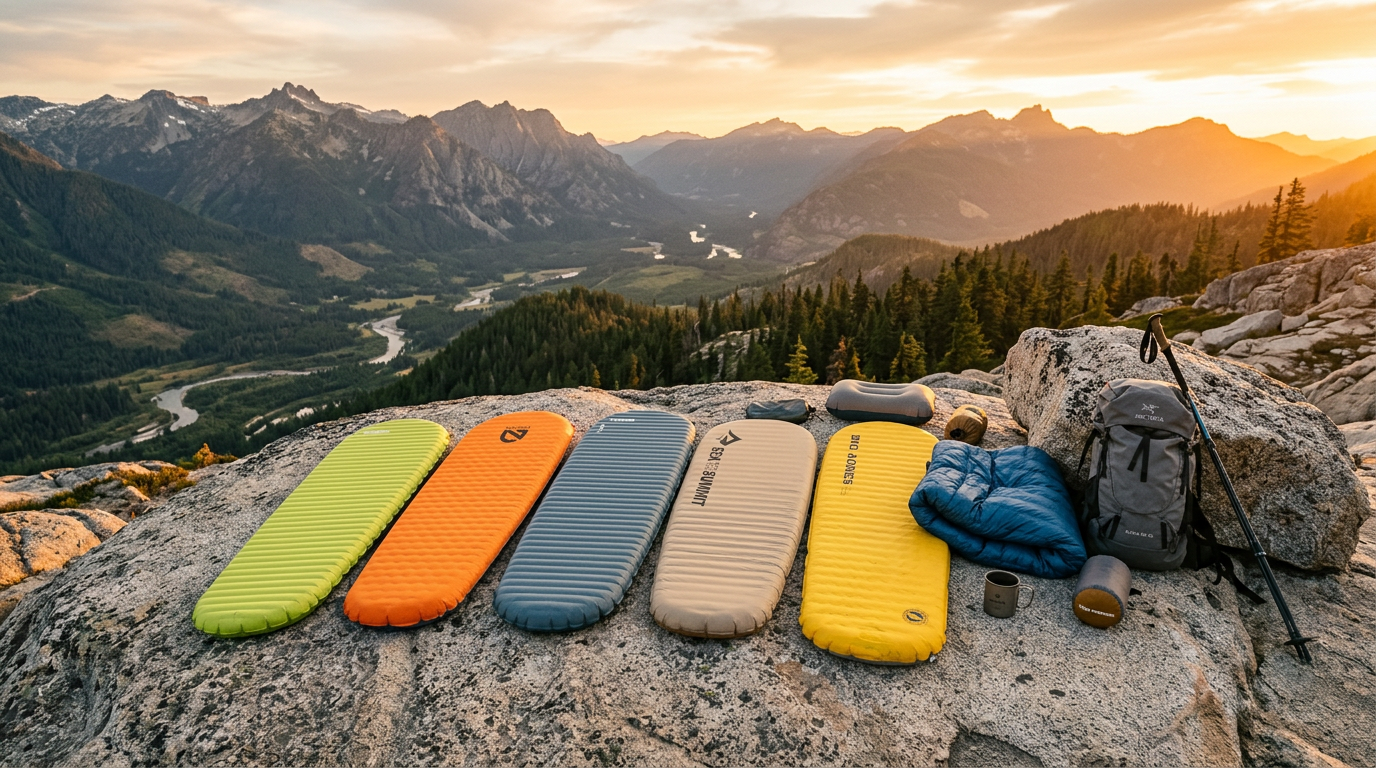
Ultralight backpacking sleeping pads represent one of the most impactful weight savings in your pack, but choosing the right one requires balancing insulation, comfort, packed size, and durability. We evaluated these pads based on weight per square inch of sleeping surface, R-value efficiency, baffle construction quality, valve reliability, and real-world packability in typical backpacking loads.
Best Overall: Therm-a-Rest NeoAir XLite NXT
The NeoAir XLite NXT earns best overall for its unmatched combination of warmth, weight, and three-season versatility. At 12 ounces for the regular 72-inch length, it delivers an R-value of 4.5 using Therm-a-Rest's ThermaCapture technology—reflective barriers that trap radiant heat without adding insulating fill weight. The horizontal baffle construction with internal baffling creates a stable sleeping platform 2.5 inches thick, while the triangular core matrix reduces convective heat loss. The WingLock valve allows rapid inflation and deflation, and the 30-denier ripstop nylon face fabric with DWR coating strikes a reasonable balance between abrasion resistance and weight savings.
What we like
Trade-offs
Best Budget: Klymit Static V2
The Klymit Static V2 takes the budget category by delivering legitimate ultralight credentials at a fraction of the cost of premium pads. Weighing 16.3 ounces in the regular size with a 72-inch length, it uses Klymit's signature V-chamber design—deep welded baffles that run the length of the pad to limit air movement and create a supportive structure. The 75-denier polyester fabric is noticeably more durable than competitors' 20-30 denier materials, making this an excellent choice for rougher campsites or newer backpackers still developing site-selection skills. The R-value of 1.3 limits this pad to summer use above 40°F, but the 2.5-inch thickness and body-mapping chamber design provide surprising comfort for the weight class.
What we like
Trade-offs
How We Picked
Understanding R-Value and Temperature Ratings
R-value measures a sleeping pad's resistance to heat flow, with higher numbers indicating better insulation. The ASTM F3340-18 standard now provides consistent testing across brands: R-value 1-2 suits summer conditions above 50°F, R-value 2-4 handles three-season use down to 30°F, and R-value 4+ extends into winter. For ultralight backpacking, the sweet spot is R-value 3-5, providing adequate warmth without excessive weight. Remember that R-values are additive—stacking a closed-cell foam pad under an inflatable combines their insulation values.
Specs
Fabric Durability Considerations
Ultralight sleeping pads sacrifice durability for weight savings through thinner face fabrics. Denier measures fabric thread thickness—20-denier fabrics found in premium ultralight pads weigh less but puncture more easily than 75-denier budget options. The tradeoff is real: a 20-denier pad might save 4 ounces but requires meticulous site preparation, clearing every twig and pine cone, while 75-denier fabrics tolerate rougher ground. For extended trips or alpine environments with limited flat ground, the durability of heavier fabrics provides valuable insurance against trip-ending failures.
- 20-30 denier: Premium ultralight pads requiring careful ground prep and footprints
- 40-50 denier: Balanced option with moderate puncture resistance
- 75+ denier: Budget-friendly pads with excellent durability for rough campsites
Inflation Methods and Valve Design
Valve design significantly impacts field usability. Large-diameter valves like Klymit's allow rapid inflation in 10-15 breaths but introduce more moisture into the pad, which can freeze in cold conditions or promote mildew in storage. Advanced valves like Therm-a-Rest's WingLock system use one-way inflation that prevents air escape between breaths while maintaining reasonable flow rates. Some backpackers carry ultralight pump sacks that inflate pads without breath moisture, adding 1-2 ounces but extending pad longevity and preventing internal ice formation on shoulder-season trips.
Baffle Construction and Sleep Comfort
Baffle architecture determines how air distributes across the pad and affects both insulation and comfort. Horizontal baffles running perpendicular to the body create uniform support and prevent air from pooling at the foot end when you sit up. Vertical or V-shaped baffles can reduce weight by eliminating internal fabric but may create pressure points or allow air migration. Thickness matters for side sleepers—2.5 to 3 inches prevents hip and shoulder contact with the ground, while back sleepers often find 2 inches adequate. Mummy-tapered designs save 2-3 ounces versus rectangular pads while still accommodating most sleepers' shoulders.
+Do I need a sleeping pad footprint or groundsheet?
For ultralight pads with 20-30 denier face fabrics, a footprint adds valuable puncture protection and extends pad lifespan significantly. Polycryo (window insulation film) weighs under 1 ounce for a pad-sized piece and costs a few dollars, making it the lightest option. Tyvek provides more durability at 2-3 ounces. For 75-denier pads like the Klymit Static V2, footprints are optional—careful site selection clearing debris is usually sufficient. Always inspect your sleeping area for sharp objects regardless of pad durability.
+How do I repair a punctured sleeping pad in the field?
Carry a patch kit with self-adhesive patches and give the pad surface time to dry completely before applying repairs—moisture prevents adhesion. For small punctures, locate the leak by inflating the pad and listening for escaping air or applying soapy water to see bubbles. Clean the area with an alcohol wipe if available, apply the patch with firm pressure, and wait 30 minutes before re-inflating. Tenacious Tape or Tear-Aid patches provide stronger field repairs than the thin patches included with most pads. For large tears, duct tape can create a temporary seal to get you through the night.
+Can I use an ultralight pad for winter camping?
Only pads with R-values of 4.5 or higher provide adequate insulation for winter conditions below 30°F. The NeoAir XLite NXT at R-value 4.5 works for mild winter trips, but serious cold-weather camping requires R-values of 5-7+. Many winter backpackers stack a closed-cell foam pad (R-value 2-2.5) under an inflatable for combined insulation and puncture protection on snow. The foam pad also provides emergency insulation if the inflatable fails. Budget summer pads like the Klymit Static V2 with R-value 1.3 are completely inadequate for winter—you will lose dangerous amounts of body heat through ground contact.